What I will discuss in this article are three things I pay close attention to when reviewing the application of a new driver: convictions, CVSA performance, and PSP report information. While these are not the only items I consider when hiring, they are all related to each other and make for good topics for those hiring drivers and for drivers to see what carriers may be looking at when hiring.
Convictions
Convictions are traffic offences where a driver has been found guilty. These are different from charges. For example, if you are pulled over for speeding by a police officer and the officer writes you a ticket, the officer has charged you by writing the ticket. However, you are not convicted of that charge until you plead guilty.
Paying the fine means you have accepted and pleaded guilty to the charge, and at this point the charge becomes a conviction and appears on your abstract. If you choose to dispute the charge in court and it is dropped then you are not convicted of the charge.
A driver’s abstract shows convictions, not charges. Since a charge is a peace officer alleging that a driver has broken the law and the driver has the right to a fair trial, their abstract can’t show the incident until guilt has been proven. So if, when reviewing a driver’s abstract, you see convictions for a traffic violation, that means that the fine has been paid and the charge accepted.
While on its surface this implies that the driver has accepted guilt, we should not be so quick to judge. Many people do not understand the court system and their rights, and paying a ticket often seems simpler and easier than going through the process of disputing it – even if they believe they aren’t guilty.
There is always more to a story than what is written in the few lines dedicated to describing the event, so if you’re reviewing the abstract of a potential new hire and you see a traffic conviction, I believe it is best to dig a bit deeper and review the incident with the driver to get a fuller picture.
I am not saying that you should brush off convictions nor violate your policy or insurance company’s requirements for maximum numbers of demerits or convictions of a certain type. What I am saying is that a driver’s abstract is a starting point for a conversation with the individual about their safety and professionalism, and such a conversation is a good way to learn about the people you are considering hiring.
CVSA Performance
Besides convictions, a commercial driver’s abstract may also contain additional information about safety performance. In Alberta, for example, there is a section in a commercial abstract for roadside inspection information. This is provided by the CVSA (Commercial Vehicle Safety Alliance), an inter-jurisdictional organisation that sets standards for commercial vehicle enforcement officers in North America.
If a commercial driver has been subject to a roadside inspection by a commercial vehicle enforcement officer, this information can be reviewed on their commercial abstract. For each inspection event there will be information about what type of inspection was done (for example, it may say “Level 1 – Full” meaning a full inspection of the vehicle and driver documents was done).
After listing the type of inspection, results will be shown. If something like “No Violations” or “Passed” is recorded then the roadside inspection officer found nothing wrong. This is good: it means the driver has a demonstrated history of safety and compliance. So if you review an experienced driver’s abstract and there are multiple pages of clean inspections, this is a good indicator that this driver is a professional operator.
What if there are no CVSA inspections? Instead of brushing the driver off as inexperienced, you should look at their previous places of operation. For example, a truck driver who operates in the oil patch may go years without passing over a government scale or being selected for a CVSA roadside inspection, so a lack of inspection information does not equal an unsafe or inexperienced driver. Long-distance highway drivers typically have more interaction with CVSA officers as scales are most often located along highways, and so the abstracts of these drivers will usually show more inspection information than local or off-road drivers.
What about inspections that show violations? Like the conviction section above, dig deeper and look for patterns. Did all the failed inspections occur while the driver was employed with a certain carrier? Perhaps the driver was new and unaware of many regulations and a previous carrier did a poor job of getting appropriate permits or maintaining equipment. The driver is responsible for safe and legal compliance, but drivers at companies which provide adequate training and support have an advantage over drivers at companies with a poor attitude to safety.
Hiring a new driver means judging another human being; a decision should only be made after a thorough review of available information while adhering to internal safety policies, industry best practices, and – of course – legal requirements.
PSP Report Information
In the USA, the Federal Motor Carrier Safety Administration (FMCSA) has an optional program called the Pre-Employment Screening Program (PSP). The PSP provides 5 years of crash and 3 years of CVSA inspection information for all commercial drivers with a history of driving in the USA, and a carrier can request a PSP report for $10 USD for a prospective hire after obtaining written consent from the driver (see the FMCSA’s PSP website for more information about the program and record-keeping requirements).
A PSP report offers more insight into a driver’s history. Data transfer between Canada and the USA isn’t perfect, so a conviction or inspection in one country will not necessarily be detected in another. If you’re hiring a driver with a history of US commercial driving, pulling their PSP report can reveal additional information about their safety and professionalism. Even if you are hiring them for a Canadian-only position, it is always good to have more information about a possible future driver. Additionally, if they claim to never have driven commercially in the US, a PSP report can support that claim or, if it shows US driving information, show dishonesty.
Like I have mentioned in the sections on convictions and CVSA performance, use information in the PSP report to paint a better picture of your prospective hire. During your assessment, keep judgements in check before hearing what the driver has to say. Their explanation of events can speak to their levels of humility, acceptance of fault, and professionalism.
In conclusion, I hope that this article has been either illuminating or a good refresher for those hiring drivers, as well as being useful to drivers to see what sorts of information are considered by a carrier making a hiring decision. If I have given the impression that I am overly-dismissive of recorded safety violations or skeptical of government-provided commercial driver safety records, that was not at all my intention. These sources of information are extremely valuable and robust, and no violation is worth overlooking. But, it is a person being evaluated, and we owe our fellow citizens the respect and dignity of a full review and consideration and at a certain point in the hiring process, an opportunity to speak for themselves.
Dave Elniski
Dave Elniski is a Transportation Safety Professional you can reach him via email at dave.elniski@gmail.com or connect with him on LinkedIn
New Terminal in Toronto Must Have AZ license Must Have 1 Year experience
Are you looking to get your spouse trained to drive a truck with you? Call Mike Hahn to ask how you can get approved for a spousal training program.
We are continuing to grow the fleet in Mississauga. Trans West is the leading team company for runs to California with a dedicated customer base which means no open board. The drivers at Trans West dictate their home time and on the road time availability with regular work year round. We offer great equipment, leading industry pay package and great home life balance. We require drivers with at least 1 year verifiable experience clean cvor,abstract and FAST card. If you are looking for a great team exclusive company that is driver satisfaction focused look no further. We have lots of work during this crisis and are in need of experienced teams.
What we offer: Regular loads primarily to California Great Equipment Pay 3 times weekly 5-6 day turn around times. Team dedicated company Dedicated customer base in both Mississauga and California Loads pre loaded in Mississauga and drop when you return Top TCA safety rating Dedicated truck What we require: Team partners Experience in refer loads to California 1 year experience Fast cards Teams willing to run at least 4 trips a month. Call Mike Hahn for more information. (416) 606 – 8296
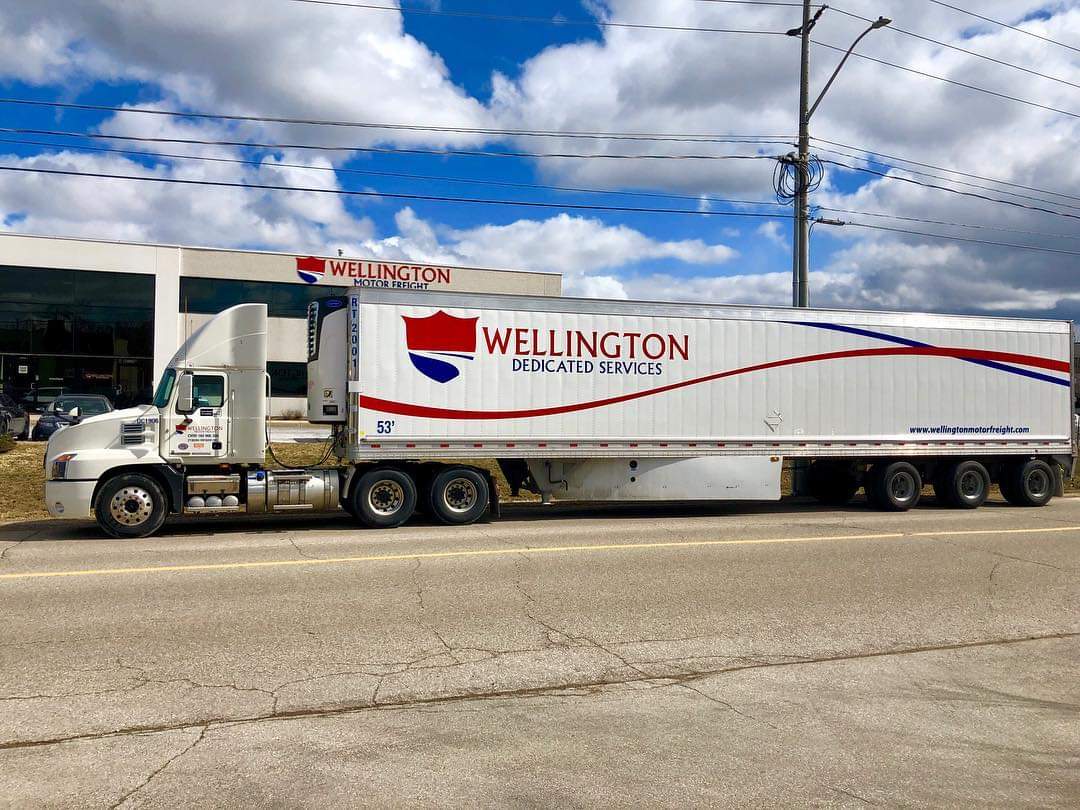
Wellington Motor Freight is hiring a Full-Time local AZ driver in Ingersoll. Earn a salary of $65000 working the afternoon/night shift, average 8 or 9 hours per shift. Driving a day cab doing pick ups and deliveries to production facilities in Windsor, Wheatley, Strathroy and Woodstock. Minimum of 3 years of experience needed. Current driver is retiring but will still be available to fill in if you ever need time off.
I’m sorry it’s taken me so long to write to you. It’s not that I’m not thinking of you, but I’ve been busy. As we enter a New Year, it seems like a good time to get back in touch.
It may seem that I sit up here in the cab of my truck, looking out over the roof of your car, not paying any attention. The truth is I am always watching out for you. I’ve learned to see a slight movement of your head that tells me you are thinking of making a lane change. If we are approaching a freeway interchange or off ramp, I try to anticipate your next action. I know when you are on the phone, eating, changing the station on your radio, talking to your passengers, or shouting at your children in the back seat. I can usually tell when you are tired or impaired. I know when you’ve only got one hand on the steering wheel while the other is holding your cell phone as you tap out a text message (and of all the activities that get your attention, that one frightens me the most). I am keeping my eyes on you, all of you, all the time. I have no desire to cause injury to another human being and am well trained in doing whatever I can to prevent a collision, but I am only half of the equation.
Now I’d like to tell you some things about myself, so we can get better acquainted.
When my full sized semi is loaded, it weighs at least 80,000 pounds. If my truck were to land on you, it would be like dropping forty or fifty cars on your head. Since it takes four times the distance to stop my truck than it does your car, you can understand why I don’t like it when you cut in front of me. I am much bigger than you. I really need you to remember that when we are on the road together.
My truck is almost seventy feet long. I can’t make any sharp turns, and I need extra space to go around a corner. Left turns are much easier and I try to plan my city driving with those, but it isn’t always possible. I know you get impatient when I sit at a green traffic light, but I may be waiting to have enough room to make my turn without taking out a pole or running over another car. I always try to avoid starting a maneuver that I cannot safely finish, such as getting through an intersection before the light changes to red. I wish it was easier, believe me, but there is nothing I can do to change the way it must be done.
I have as many as fifteen gears in my truck, and it takes me awhile to go through them. I do wish my truck accelerated as fast as your car does so I could get on a freeway at 60mph instead of 45mph. I sometimes get very tired of having to go slowly up mountains and around curves. I would love to drive faster and I wish there weren’t slower posted limits for trucks in many states. But that’s how it is, and I have good reasons for wanting to obey the rules of gravity and the Law. Please be patient. I’m peddling as fast as I can!
The entire right side of my truck is a blind spot. A lot of the left side is too. And when you tailgate me, I can’t see you. As bad as all that is for me, it’s worse for you. Please don’t pass me on the right unless you are very sure I know you are there; I usually drive in the far right hand lane and I may move in that direction when you are next to me. It also makes me nervous to have you close behind me because I know you can’t see what’s going on in front of me. If something happens that causes me to slow down, you may run into the bumper that hangs off the back. It is called a D.O.T. Bumper, and it is a very solid object. It was designed to prevent cars from sliding under trucks in rear-end collisions, because those drivers were being decapitated. That bumper does NOT give way. Trust me.
I try to pass you carefully and with plenty of clearance. It is perfectly okay for you to flash your headlights to let me know I have room to move back over. I may not always acknowledge it but I do appreciate it, especially at night, in bad weather, and in heavy traffic; sometimes that flash is all I can see. Please only pass me when you know you have plenty of room. We both have to slow down for road construction zones. We both have to merge when lanes end. We both have to give emergency vehicles space. We both should be cautious of stalled motorists on the roadside. Because I’m bigger and wider and heavier, I must be more careful than you. Please give me room to make those changes. Don’t make me choose between your car and the guard rail or the construction worker or the highway patrol officer or the man changing the tire on his motor home.
I spend much of my work day driving in unknown areas. I may have no idea where my customer is, much less which street I need to turn on to get there. If I make a mistake, I might find myself trapped on a cul-de-sac in a residential area where I’m not supposed to take a truck in the first place. At the least, it will be a difficult situation to resolve; at worst I could cause damage to a building or a person as I try to get out. I prefer to drive slowly and get it right the first time. I know YOU know where I need to be but I can’t ask directions, and you honking your horn or gesturing isn’t making it any clearer. I’m not trying to be stupid or in your way. I’m trying to be careful.
I admit I’m not always driving at my best either. I may be tired, hungry, sick, or just wanting to get to my next stop so I can go home to my family. I may be thinking of my kids, worrying about my finances, mourning a loss, regretting the chili I had for lunch, or wondering which off ramp I need to take to get to my destination. I try to pay attention, to not get impatient, to be courteous to others, but sometimes being Human gets in the way. Please try be as aware of me as I am of you.
It will make both our travels easier and safer if you also pay attention to what I am doing. If I slow down, it may be because I can see something up ahead from my higher viewpoint. If our paths are about to cross as you merge onto a freeway, please either decrease or increase your speed so I don’t have to do it. You can slow and accelerate your car much faster than I can my truck. That also applies if I pull out to pass a slower vehicle in my lane; it will slow you down a bit if you let me in your lane, but it can grind my progress to a halt if you don’t. If I am merging left for what appears to be no reason, I may be trying to avoid a traffic jam or emergency vehicle or road construction. If you follow me it will go much smoother; if you try to out-distance me, we will still meet up farther down the road and you will save nothing. Please pay attention to those signs that are directed at truck drivers. Be aware of a reduced truck speed limits, an approaching weigh station, and travel lane restrictions. I must make those adjustments every day. I don’t make the laws, but I am expected to obey them. I’m always trying to be cooperative, and appreciate the same effort from you.
As a truck driver, I make deliveries to your grocery store, restaurant, mall, hospital, car dealership, and every other place you visit in the course of your day. Sometimes I am there when you are trying to conduct your business, and I may be in your way. I apologize. I do not set the times for my arrival, my customer does. Just as you expect good service, so do they from me. You cannot walk into any establishment and find an item used for business that did not spend at least part of its journey on a truck. Please let me do my job so you can do yours.
Truck drivers are vital to the economy of this nation. Without us, all commerce would come to a skidding halt within a week, probably much less than that. We aren’t being boastful because we know it’s the truth. We are proud of the role we have in making our country strong and giving our fellow citizens a good life. Please help us do our best for you.
And speaking of life, please remember I have one too. I spend a lot of time in truck stops because there is plenty of room for me to park. The truck stop offers showers and food and sometimes a few diversions, but after a while I get tired of the same old, same old. It’s a nice change to go to Walmart. Many Walmarts offer truck parking, but it isn’t always easy to thread my way through the lot. Sometimes I want to shop at a mall, or eat at a different restaurant, or go to a movie. I may get in your way, and I’m sorry. I just want a different view, a change of pace. Please take an extra moment of your day to make me feel welcome. I won’t stay too long and I may never be back.
We are out here together, you and I. We can make this work.
DriverCheck has been a very supportive member of WTFC since it’s inception. We value these relationships.
DriverCheck has been around since 1996 with the goal tobuild a healthier and safer world.
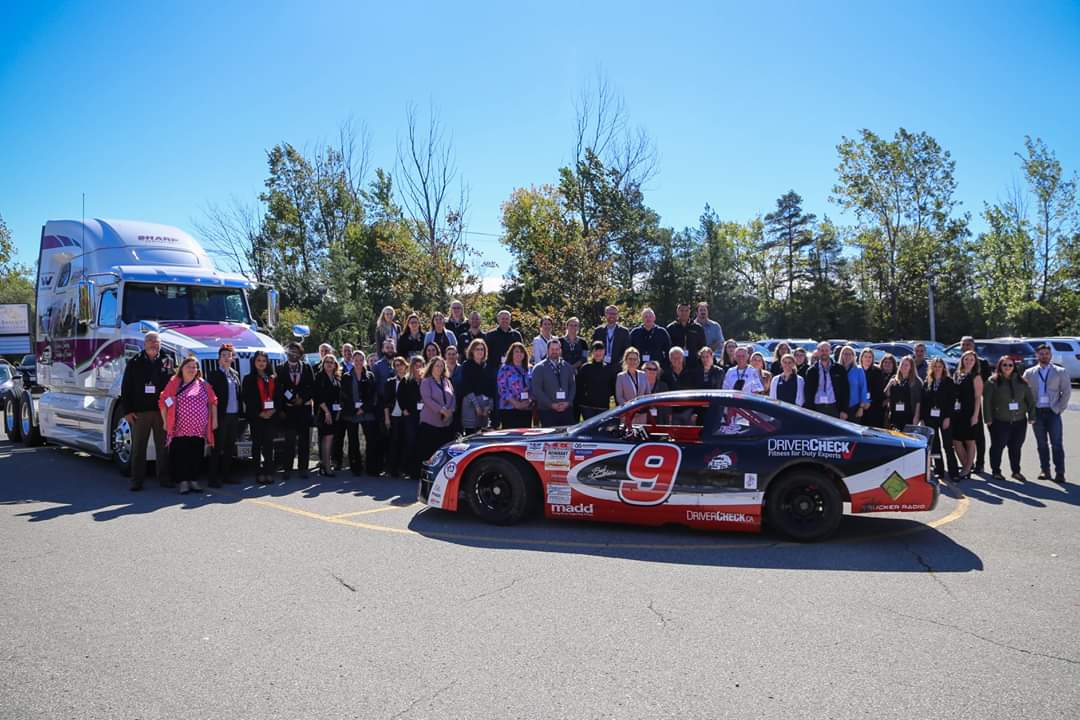
DriverCheck’s 2nd annual Fitness for Duty Summit is being held in Edmonton, Alberta on October 2 and 3. Last year over 350 people attended the inaugural event in Milton, Ontario, and they expect this year to be even bigger!
Work Safe for the Moments That Matter
This two-day educational event will address workplace challenges that employers must navigate to ensure a healthy and safe work environment for their staff and the general public. This year’s program will address a variety of fitness for duty program considerations from both a physical and mental health perspective.
The objective of this event is to provide valuable information and resources to employers so that they can put actionable items in place to build a healthier and safer workplace.
To see a full list of topics and speakers or to register